Damage and deterioration
Structural response is investigated in relation to corrosion and ageing, seismic actions, hydraulic scour, changes in support conditions and progressive loss of structural capacity.
Research
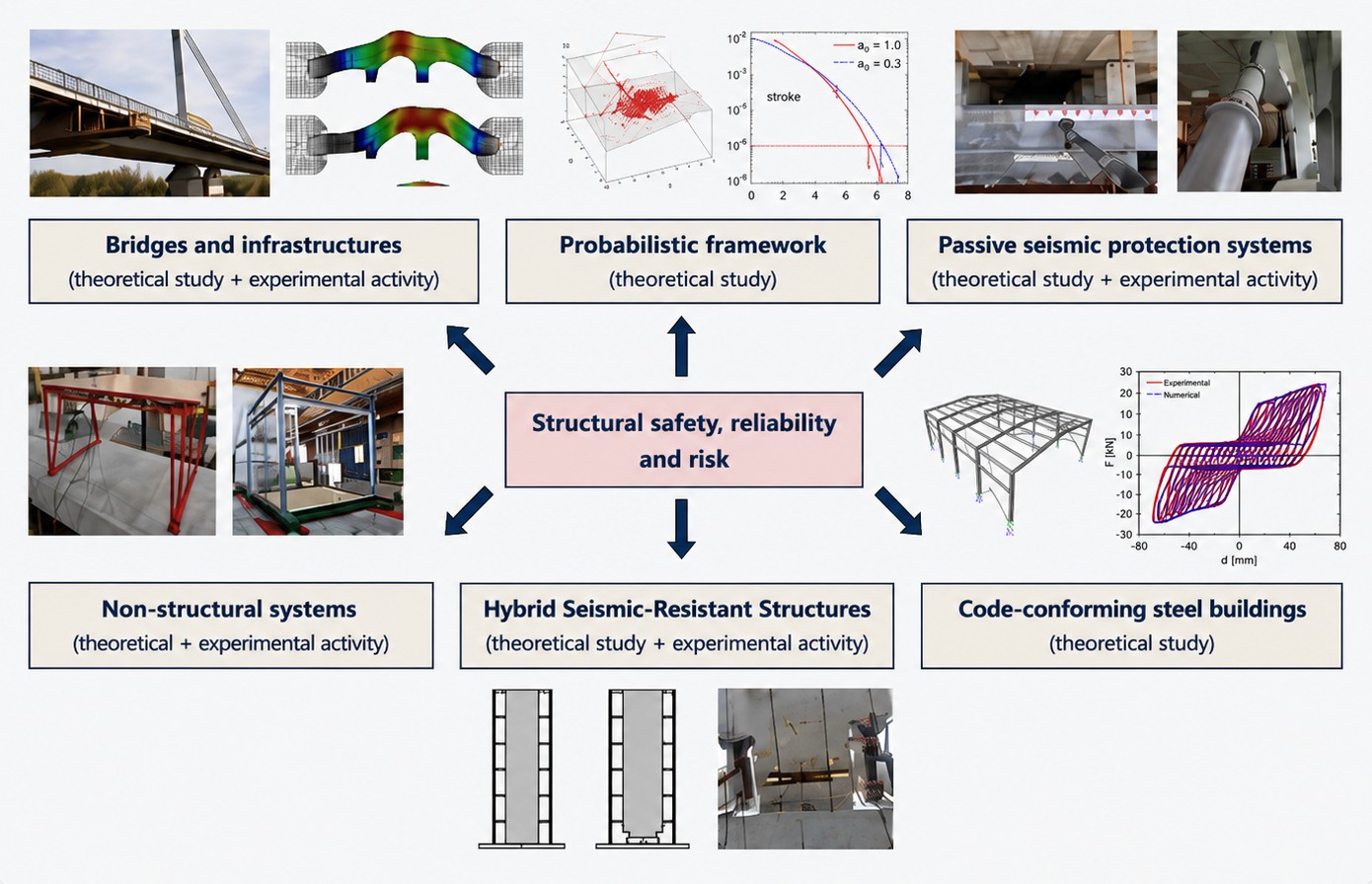
My research lies within Structural Engineering, with particular emphasis on the safety, reliability and dynamic behaviour of buildings and infrastructure.
The common methodological framework combines advanced structural modelling, probabilistic simulation, experimental investigation and the interpretation of measured structural response.
01 · Research area
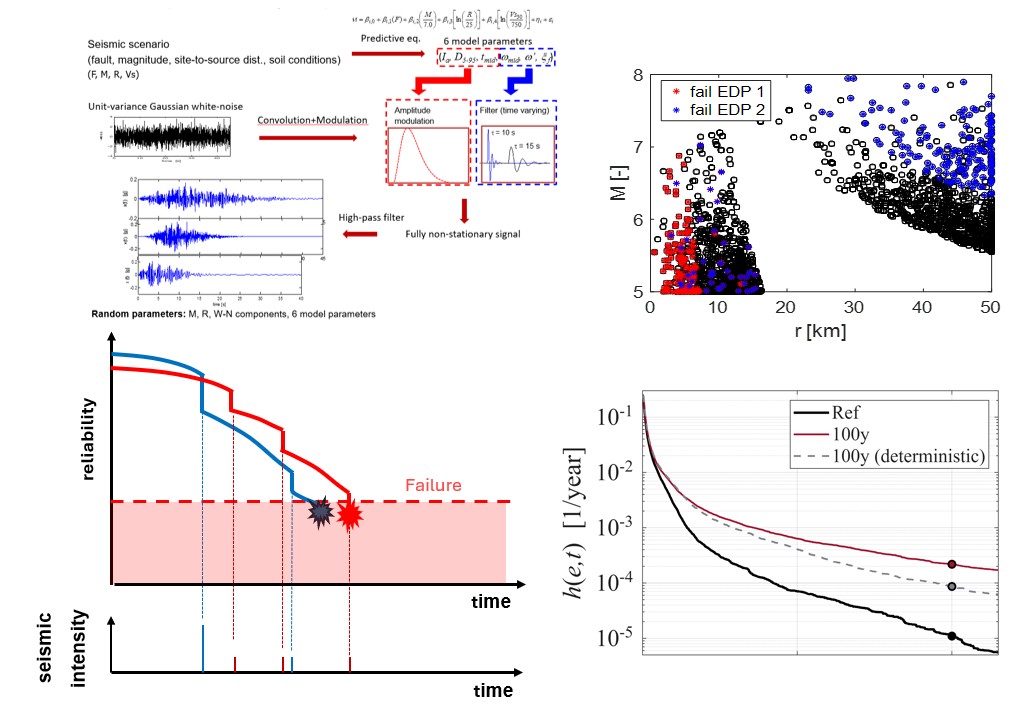
The research focuses on advanced probabilistic frameworks for the assessment of structural reliability and risk under extreme and uncertain actions.
Particular attention is devoted to the efficient estimation of low failure probabilities and to the propagation of uncertainties associated with seismic hazard, structural models, degradation processes and demand models.
02 · Research area
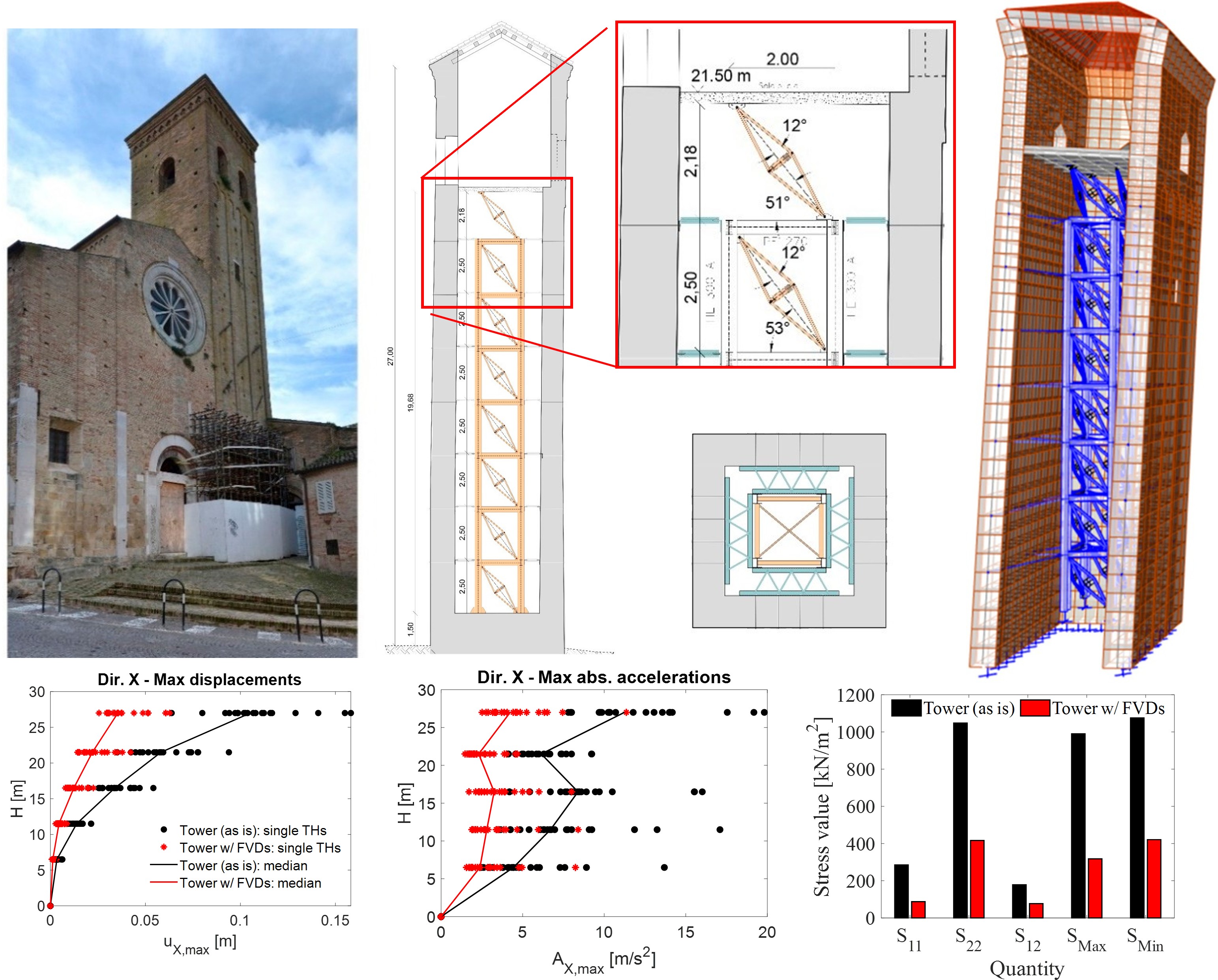
This research line investigates the safety and reliability of structures equipped with passive seismic protection systems, including fluid viscous dampers, base isolation systems and innovative retrofit solutions.
Numerical and probabilistic analyses are integrated with experimental investigation to quantify the influence of device properties, design choices and failure mechanisms on structural performance.
Full-scale push-and-release tests on the hybrid base-isolated UNICAM Research Centre provided an opportunity to analyse the dynamic response of an isolated building under large imposed displacements and to compare experimental observations with advanced numerical models.
03 · Research area
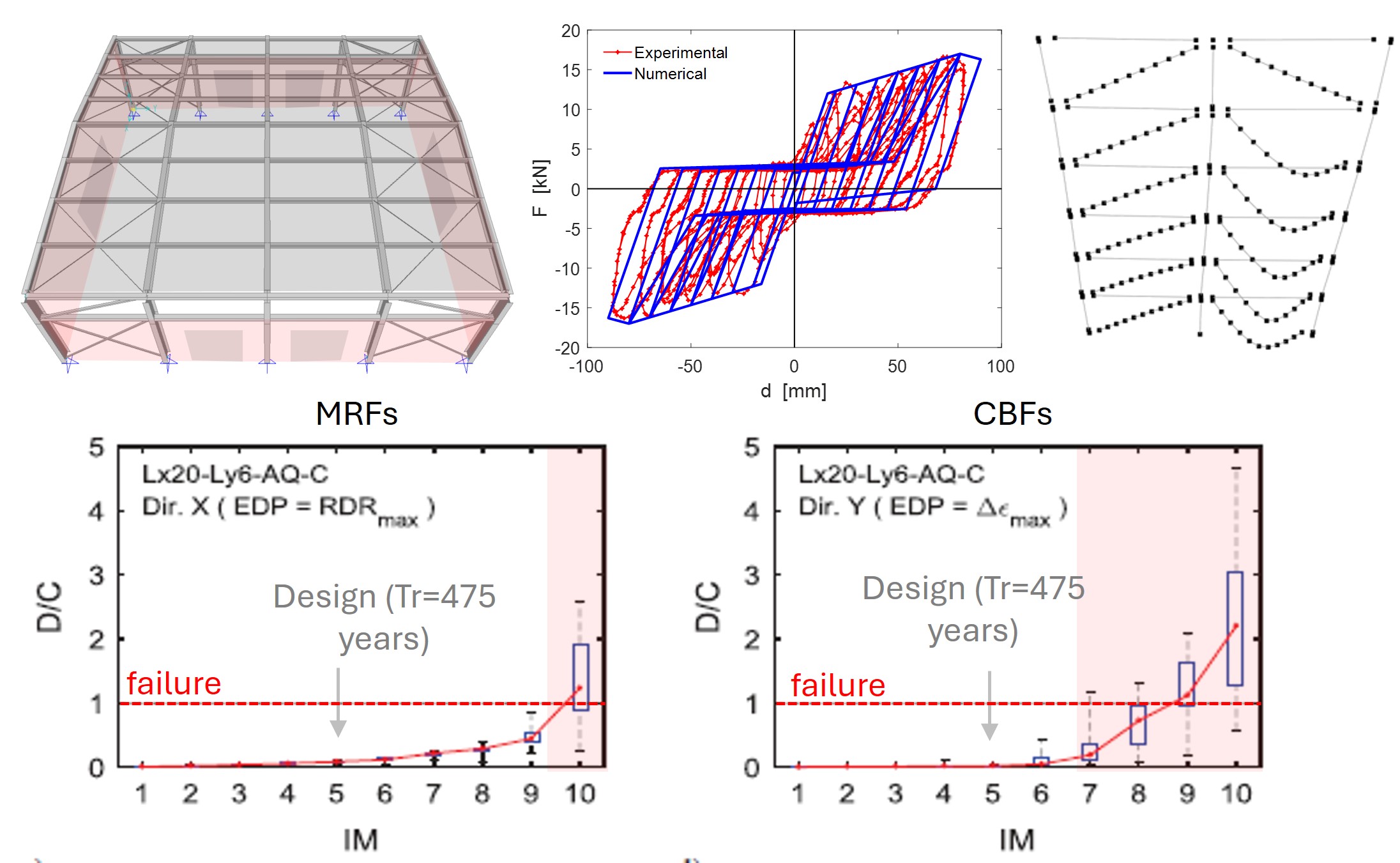
The research addresses the seismic vulnerability and reliability of steel buildings, with particular attention to nonlinear structural response, instability phenomena, modelling uncertainty and the interaction between structural and non-structural components.
04 · Research area
A central research area concerns the safety, reliability and monitoring of existing bridges, including prestressed concrete, reinforced concrete, masonry arch and steel–concrete composite bridges.
The research combines structural modelling with information obtained from field measurements and monitoring systems, with the objective of identifying response quantities that are sensitive to damage and can support structural assessment and maintenance decisions.
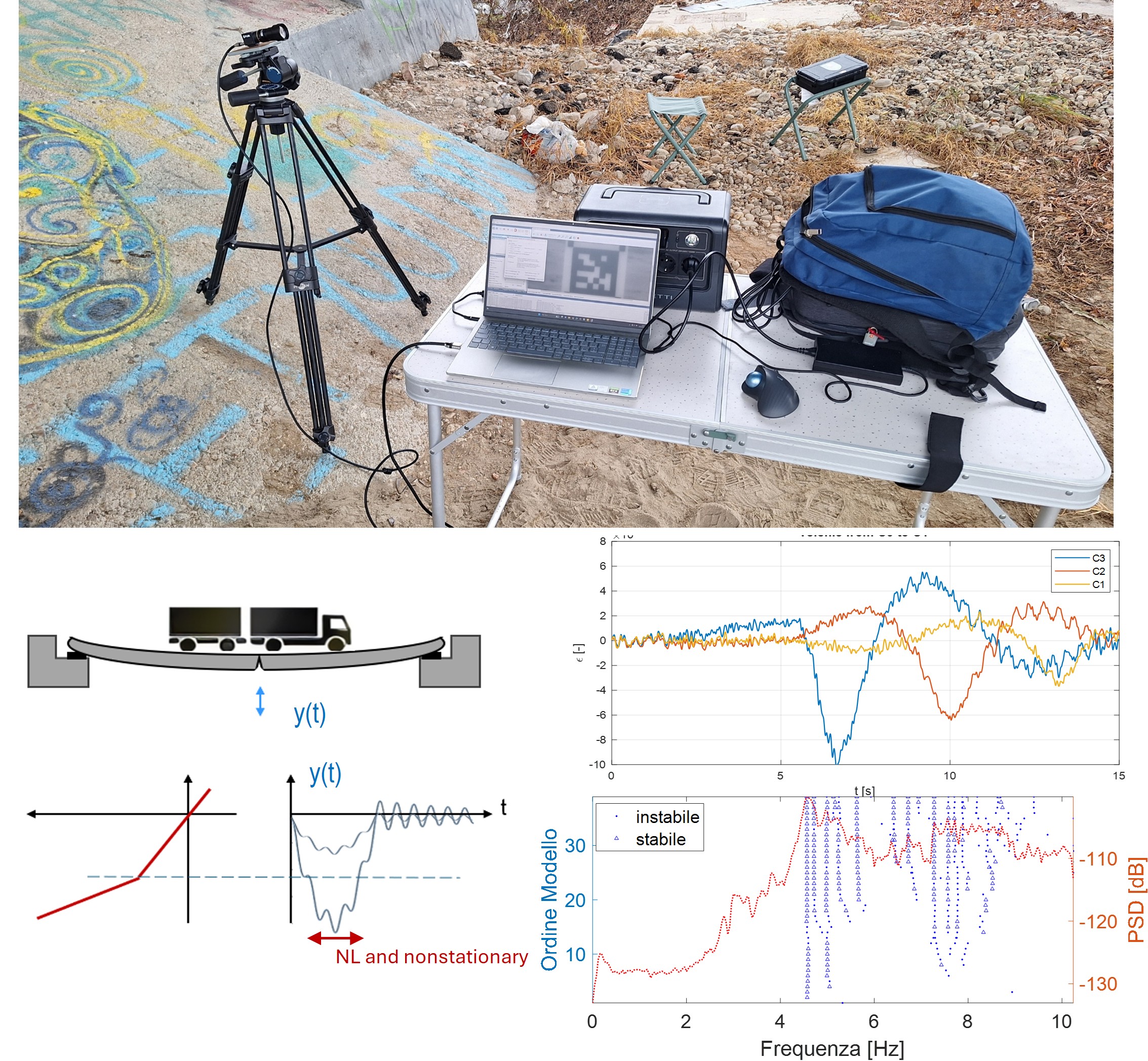
Advanced signal-processing procedures are developed for the analysis of non-stationary and nonlinear structural responses, including methodologies based on the Hilbert–Huang Transform and operational dynamic identification. Traffic-induced response is investigated as a potential source of information for continuous or repeated assessment of bridge behaviour.
Structural response is investigated in relation to corrosion and ageing, seismic actions, hydraulic scour, changes in support conditions and progressive loss of structural capacity.
Laboratory free-vibration release tests on reinforced-concrete beams have been used to investigate the capability of HHT-based procedures to detect short-lived variations in dynamic response associated with local cracking phenomena.
Midspan displacement was measured through a contactless camera-and-marker system, providing a controlled environment for methodological validation.
Monitoring-oriented application
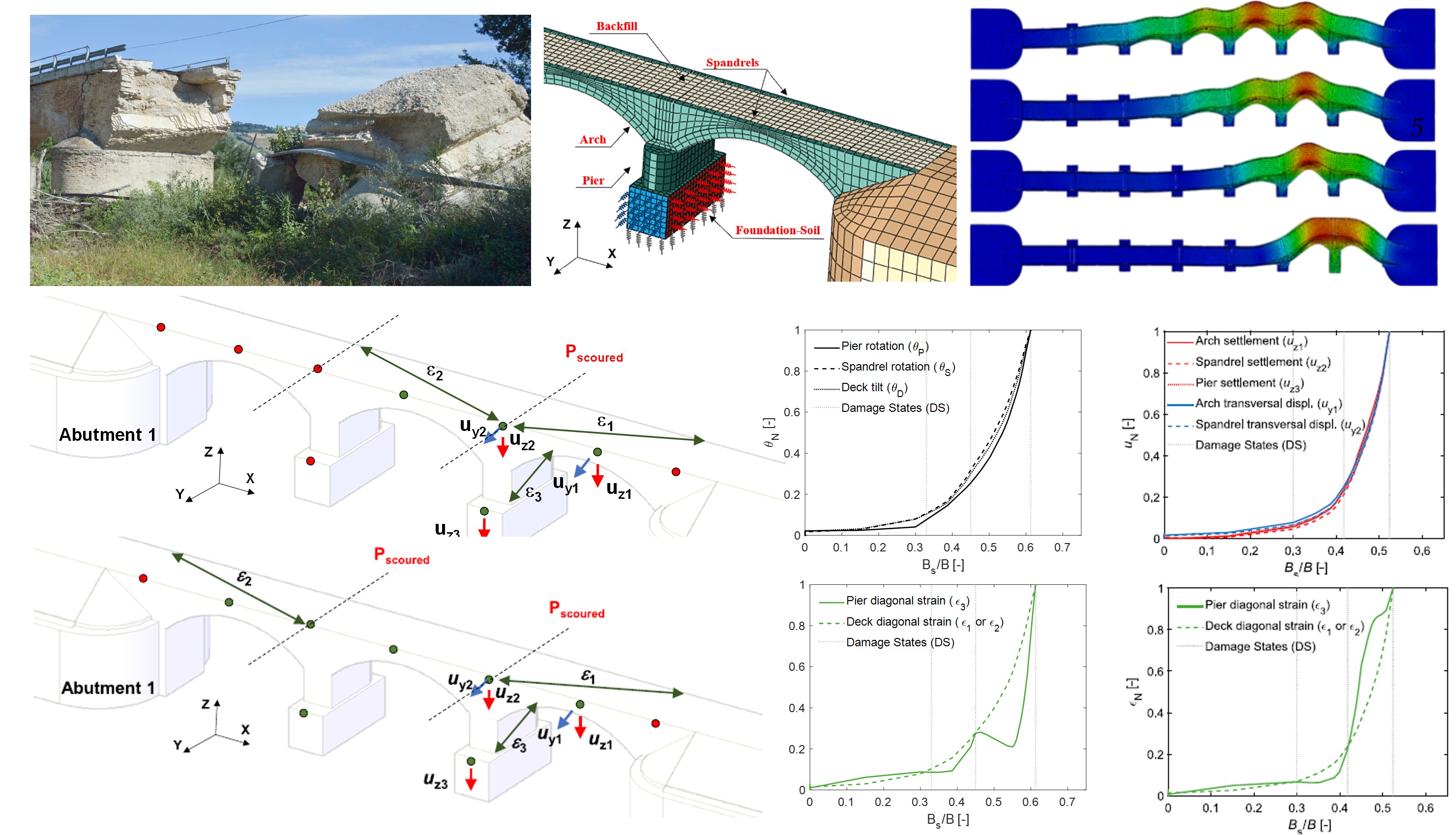
A related research activity investigates masonry arch bridges subjected to progressive foundation scour. Advanced numerical simulations are used to identify structural damage mechanisms and measurable response quantities potentially suitable for monitoring and early warning.
The focus is not only on collapse prediction, but on understanding which kinematic and dynamic quantities can provide useful information before advanced damage becomes visually evident.
05 · Research area
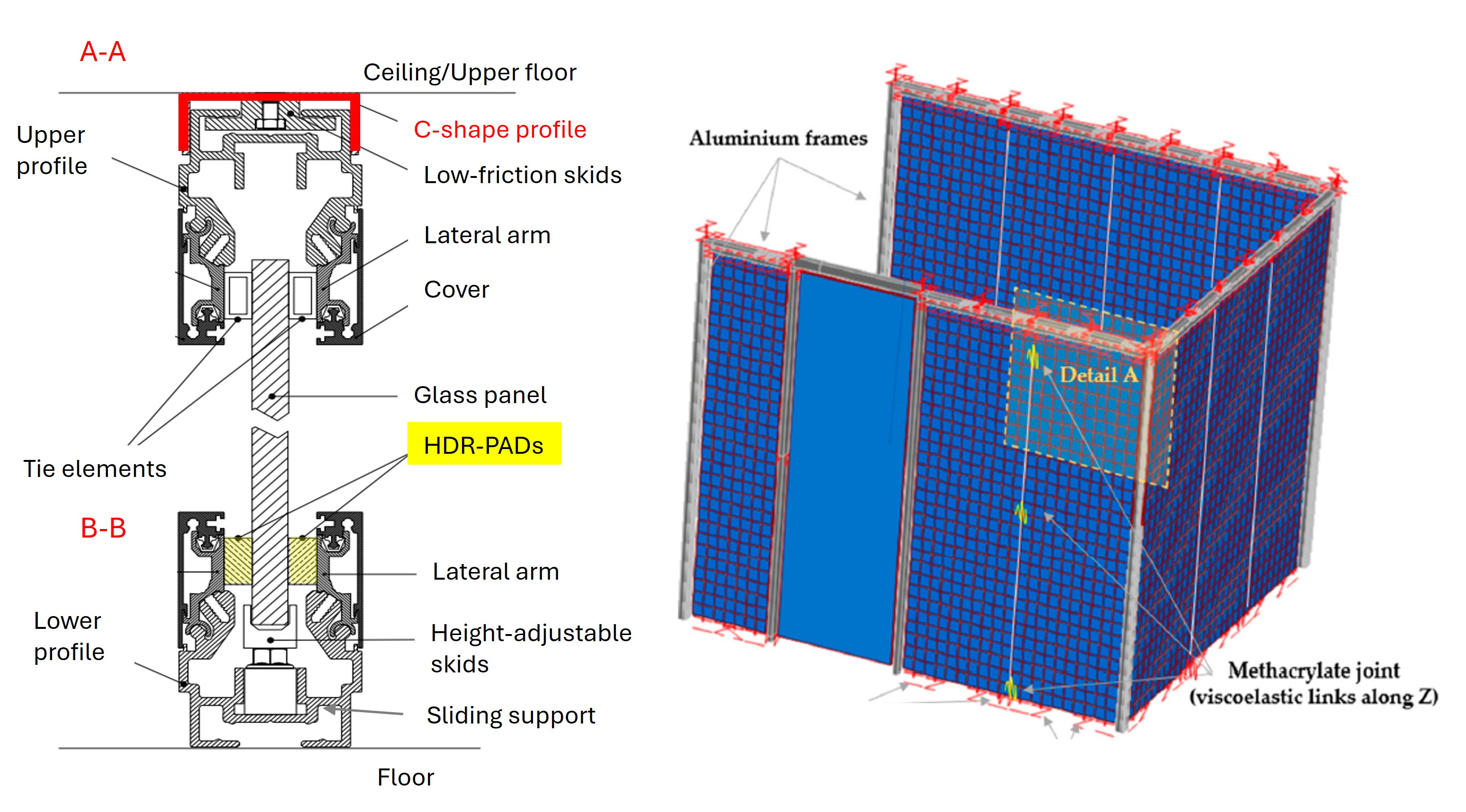
Research activities have addressed the transformation of furniture and non-structural building components into passive safety systems capable of reducing risk to occupants during earthquakes.
The work combines numerical design, dissipative materials, experimental validation and technology transfer.
06 · Research area
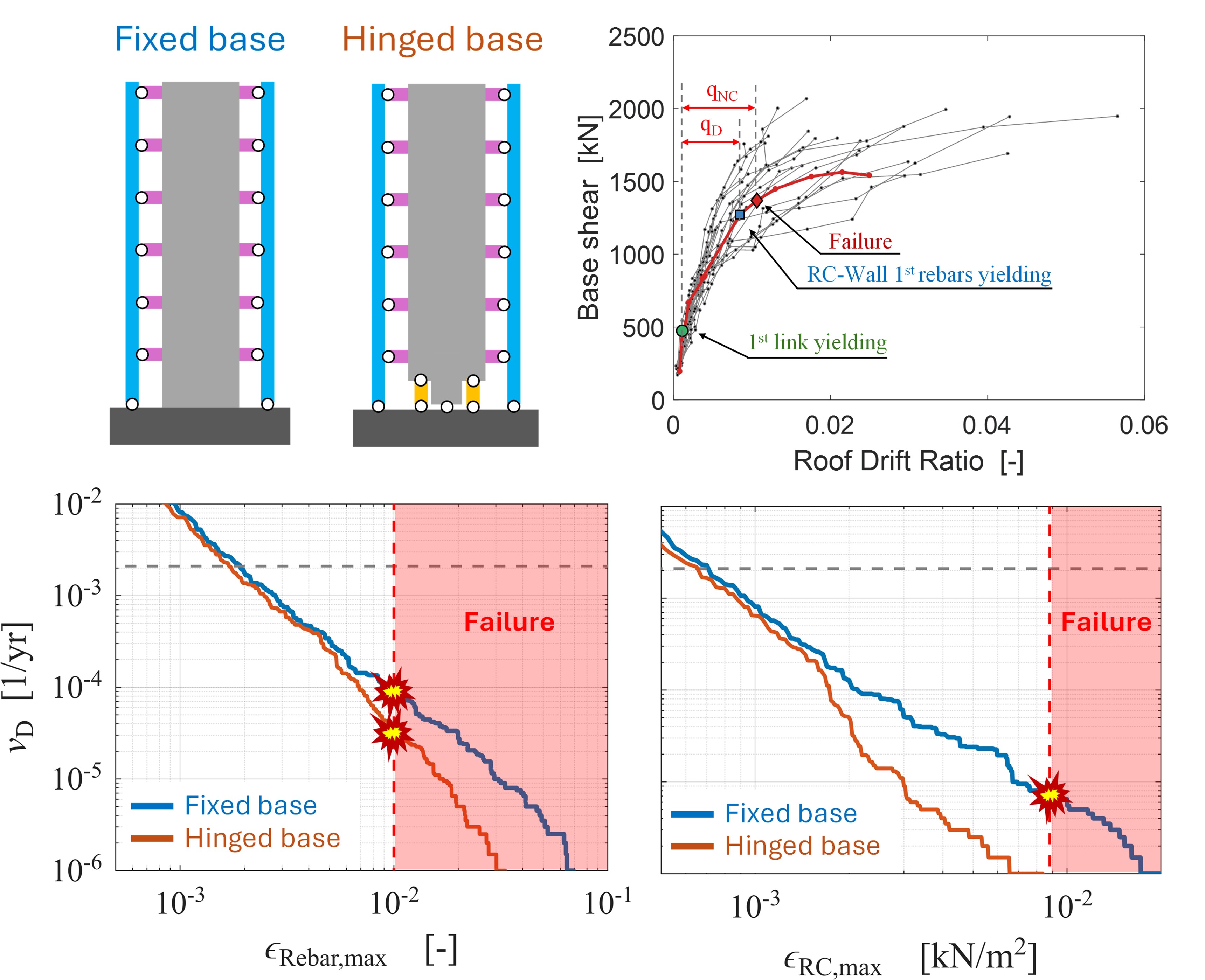
Research on innovative steel–concrete seismic-resistant systems has focused on hybrid coupled walls incorporating replaceable dissipative components and controlled damage mechanisms.
The work includes conceptual development, nonlinear numerical simulation, probabilistic assessment and experimental validation at different scales.